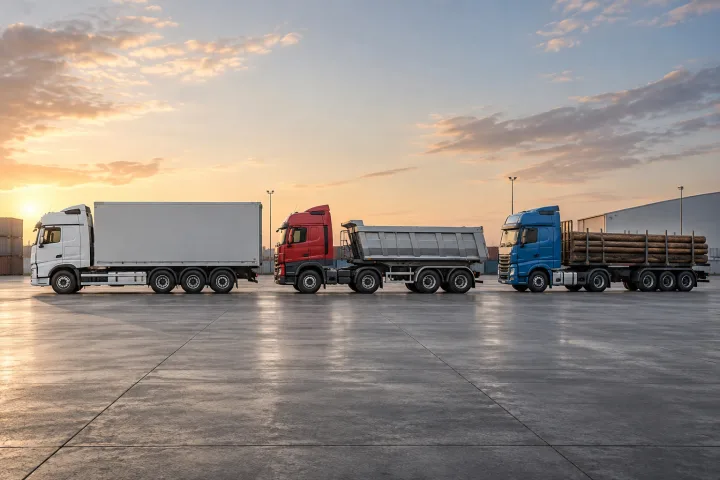
 Trucks
4x2, 6x2 or 6x4 truck: differences and how to choose
What 4x2, 6x2 and 6x4 configurations indicate, what kinds of work they may suit, and which details to check in the specifications before requesting a quote.
Read articleGoogle Analytics helps us understand how the magazine is used. It is loaded only if you accept. You can browse without enabling it. Cookies.
In a vehicle description, an axle identifies a set of wheels positioned along a transverse reference line. Depending on the design, it may be a steering axle, a driven axle, or serve other functions.
Reviewed 05.10.2026 · Version 2 · Scope: General
The term is used for different configurations, including independent suspensions. The number and arrangement of axles help describe the vehicle and interpret its mass limits.
Hypothetical example: a two-axle vehicle may have drive on one axle or on both. Counting the axles does not by itself show which ones receive power from the engine.
It helps explain dimensions, load distribution, and drive systems without confusing different vehicle functions.
Not every use of the word axle should be interpreted as a rigid component connecting both wheels. Nor is it a general geometric reference outside the vehicle context.
TrucksWhat 4x2, 6x2 and 6x4 configurations indicate, what kinds of work they may suit, and which details to check in the specifications before requesting a quote.
Read article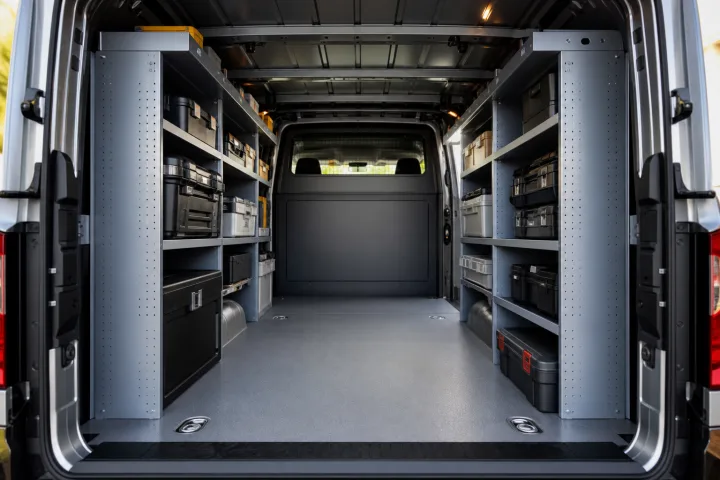 Commercial vehicles
A guide to comparing shelving, drawer units and load modules in a professional van: what to weigh, what to request in writing and when to confirm the applicable documentation.
Read article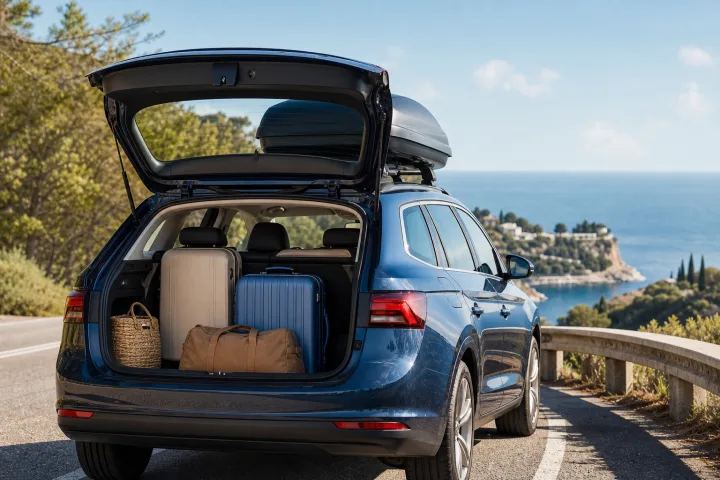 Cars
CarsWeight, roof racks, roof boxes, bike carriers and trailers do not affect consumption in the same way. We explain what to check to travel safely when fully loaded, without drawing hasty conclusions from a single route.
Read article Buses
BusesThe advertised range is not enough to make a decision. This documentary checklist helps assess the shift, bus configuration, charging and available power before a tender.
Read article Camping & RVs
A guide to leaving a campervan or motorhome unused for weeks or months without applying one-size-fits-all solutions to water systems, batteries or tyres.
Read article Camping & RVs
Beds, garage space and seating capacity are not enough to choose a campervan or motorhome. Learn how to check the masses for the specific vehicle and plan water, luggage, travellers and accessories without exceeding the MAM or axle limits.
Read article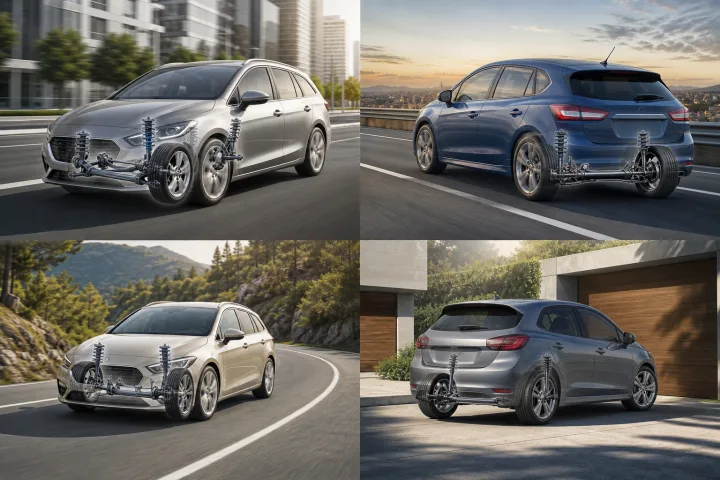 Cars
CarsA guide to comparing conventional, sport, adaptive and air suspension according to your routes, load, desired comfort and vehicle documentation.
Read article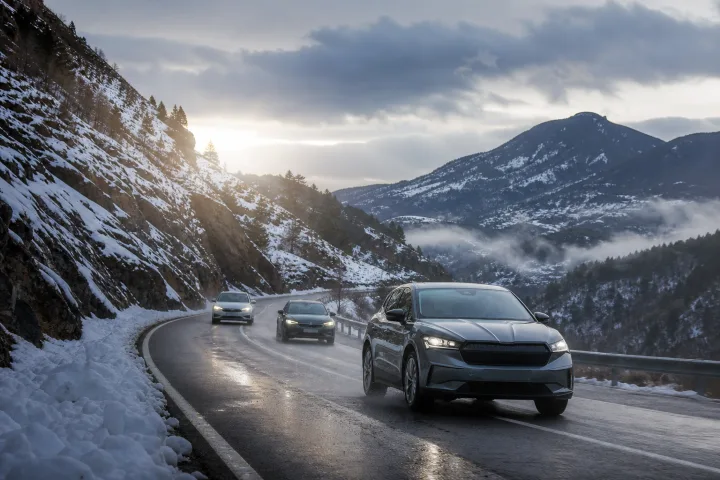 Cars
CarsAll-wheel drive does not replace suitable tyres. Compare front-wheel-drive and AWD versions based on your journeys, snow conditions and used-car checks.
Read article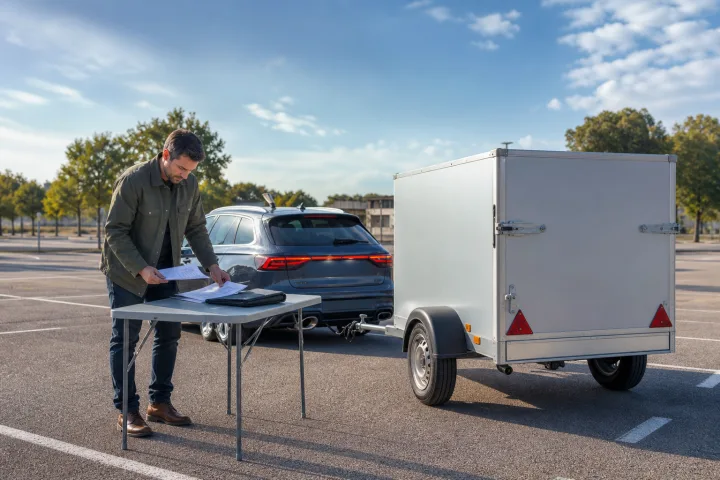 Cars
CarsThe vehicle documents, towbar, actual weight and maximum authorised masses (MAM; MMA in Spanish documentation) answer different questions. This guide explains how to check them before buying or hitching up a trailer, caravan or motorcycle trailer, and when to review B96 or B+E.
Read article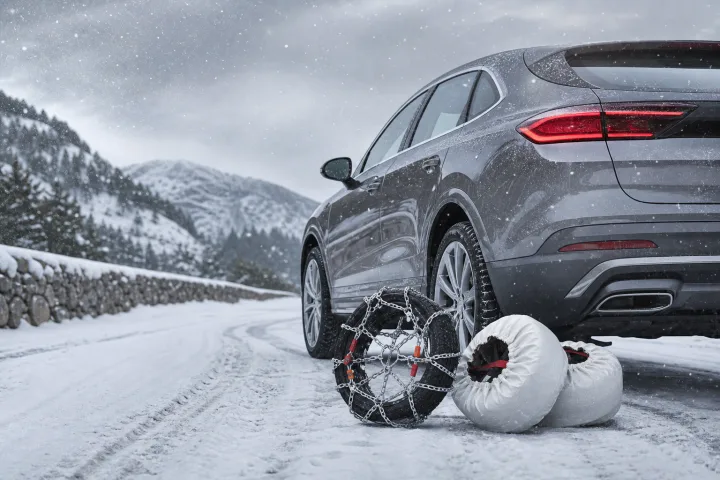 Cars
CarsMetal snow chains, textile covers and special tyres are not intended for the same use and do not have the same regulatory status. This guide explains what to check before buying and how to interpret snow restrictions in Spain.
Read article Commercial vehicles
Volume does not guarantee that a van can carry more kilograms. This guide explains which figures to compare, how to account for the real weight of the fit-out and which documents to request before completing a purchase in Spain.
Read article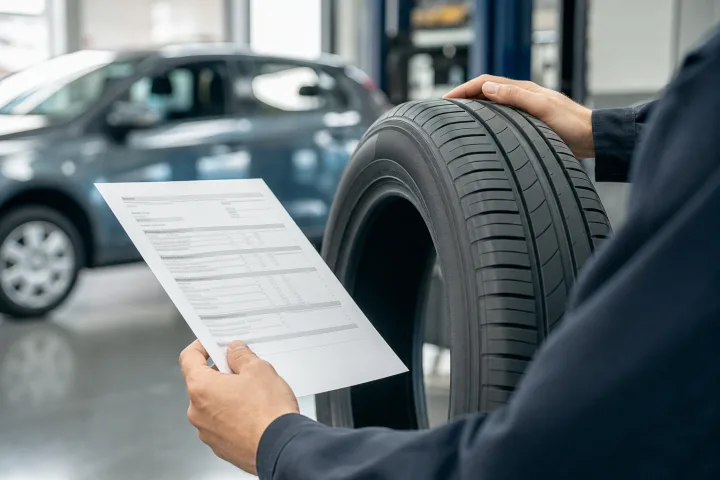 Cars
CarsThe ITV card and the tyre sidewall provide the key information needed to avoid ordering the wrong tyres. This guide explains what to compare, what each marking means and when to pause a purchase to verify an alternative.
Read article