Drum or disc brakes in a car: what changes and what to consider when buying
A practical guide to understanding the technical differences between drum and disc brakes, why many cars combine both systems, and the maintenance and safety criteria you should apply when evaluating a new or used vehicle.
Key points
Disc brakes dissipate heat better due to air exposure, while drum brakes offer longer life and lower costs. When buying, verify maintenance history and homologation of any modifications, as the rear brake type alone does not determine vehicle safety.
Basic difference and why it is not enough to value a car
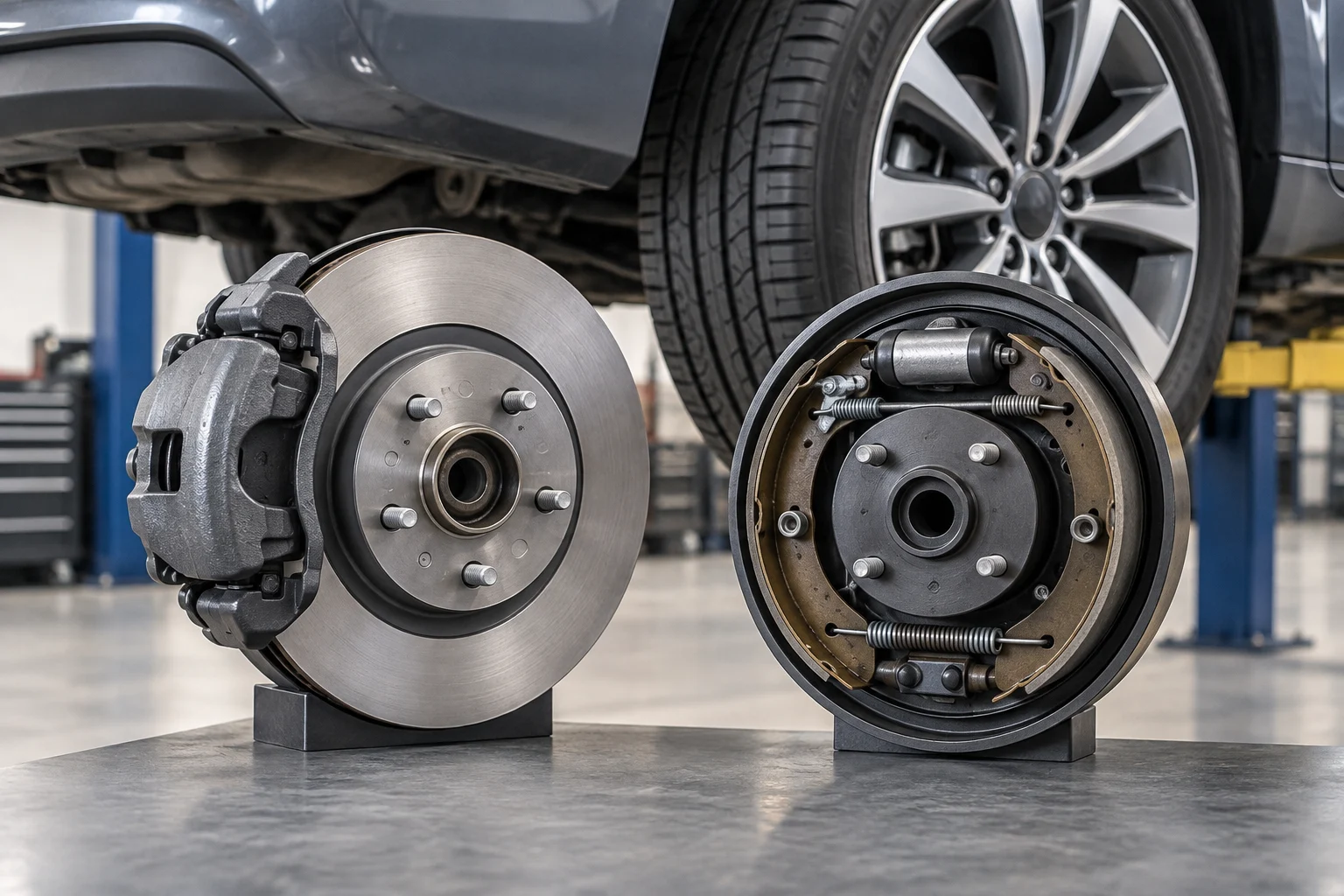
The choice between drum and disc brakes is not a matter of absolute superiority, but of design and application. In most current vehicles, discs are mounted on the front axle due to their thermal dissipation capacity, while drums may appear on the rear axle for cost and durability reasons. This combination is standard in many mass-production models and does not necessarily indicate lower safety.
When buying a car, especially a used one, the type of brake installed is not the only indicator of its condition. What really matters is the maintenance history, the actual wear of the parts, and the integrity of the hydraulic system. A car with well-maintained rear drums can brake as effectively as one with discs on both axles, provided the system is within factory parameters.
Section references: Autodoc: Freno de tambor y freno de disco ↗ · Euromaster: Diferencias entre el freno de tambor y el freno de disco ↗
- The type of rear brake does not by itself determine vehicle safety.
- The front-disc/rear-drum combination is common and technically valid.
- Maintenance condition is more relevant than the component type.
- Always verify the manufacturer's technical documentation for the specific version.
How disc and drum brakes work
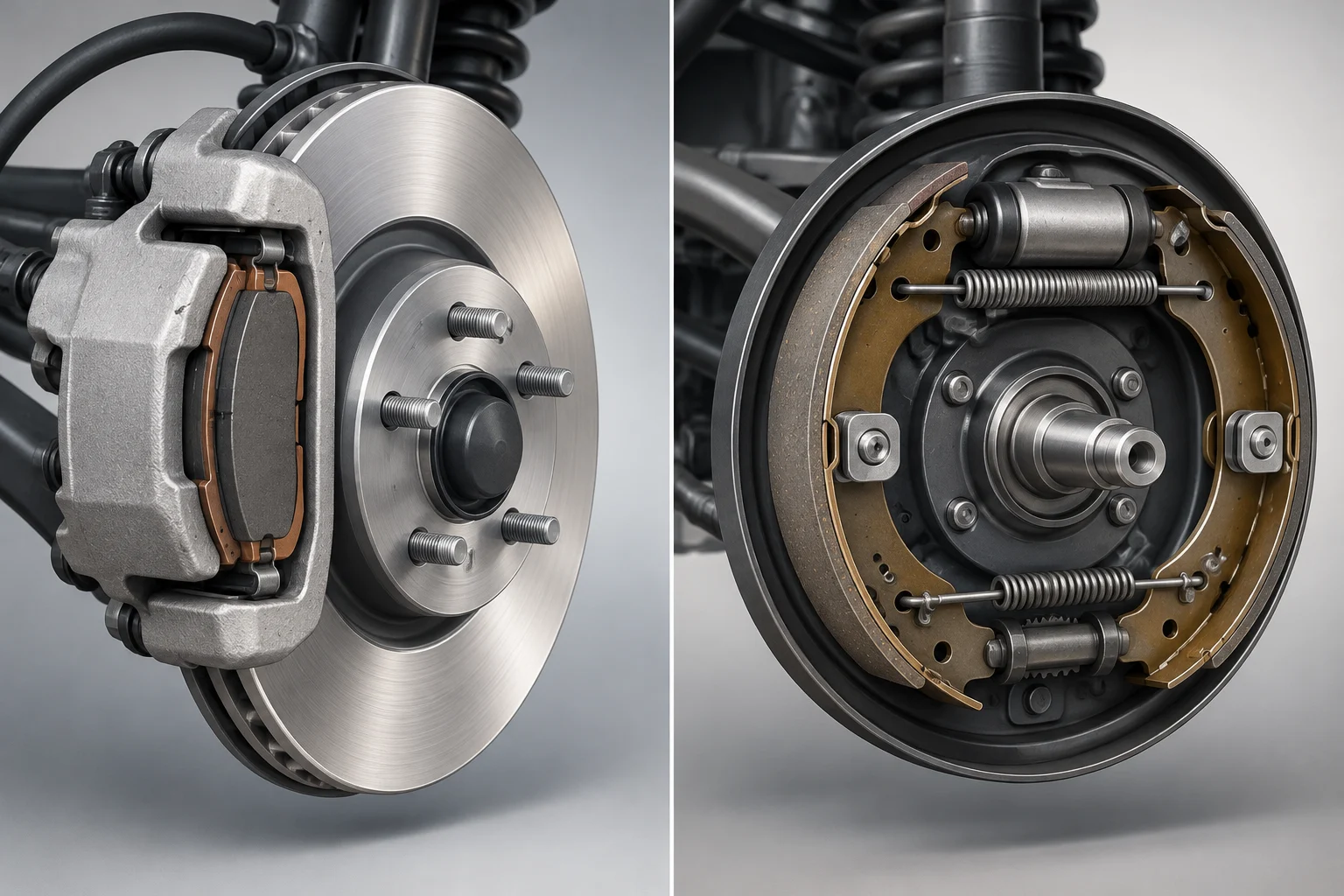
The disc brake works by means of calipers that hold friction pads which close against a rotating metal disc. This exposed design allows air to circulate freely around the disc, facilitating the dissipation of heat generated by friction. This characteristic is crucial in situations of intense or prolonged braking, such as mountain descents or sporty driving, where overheating can reduce braking efficiency.
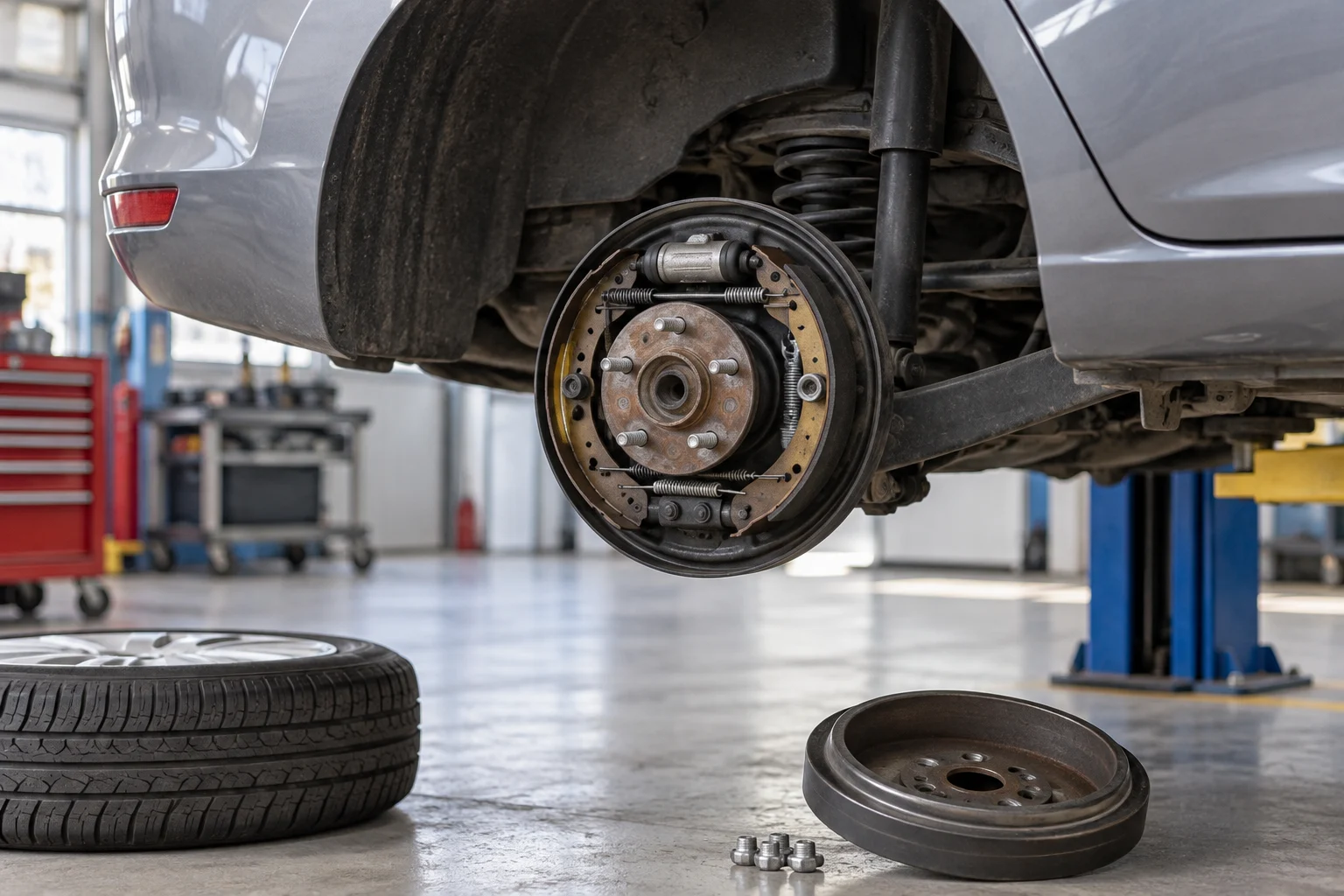
The drum brake, on the other hand, uses a hydraulic system that pushes shoes against the inner part of a rotating drum. Since the mechanism is protected inside the drum, it is less exposed to dirt and moisture, which contributes to its longer life. However, this protection also limits the thermal dissipation capacity compared to discs, as heat accumulates inside the assembly.
| Feature | Disc brake | Drum brake |
|---|---|---|
| Friction mechanism | Pads against disc | Shoes against internal drum |
| Thermal dissipation | High (air exposure) | Medium (internal protection) |
| Dirt protection | Low | High |
| Initial response | Fast | Slightly slower |
Section references: Autodoc: Freno de tambor y freno de disco ↗ · RO-DES: Frenos de disco o de tambor ↗
- Discs dissipate heat better thanks to their continuous exposure to air.
- Drums protect the shoes from dirt, increasing their durability.
- The hydraulic system is common to both, but the friction geometry differs.
- Thermal dissipation is the key factor differentiating their performance in intense braking.
Why a car combines discs in front and drums in back
The decision to mount discs on the front axle and drums on the rear responds to engineering and cost criteria. The front axle supports most of the load during braking due to weight transfer forward, so it requires a system with greater thermal dissipation capacity and fast response, characteristics inherent to the disc. On the rear axle, where the load is lower, the drum offers a more economical solution to manufacture and repair, with a useful life sufficient for most uses.
In addition, rear drums are lighter and their mechanism is protected from dirt, which reduces the frequency of maintenance under normal conditions. This configuration is common in mass-production vehicles and should not be interpreted as a safety limitation, but as an optimization of costs and durability for the use intended by the manufacturer.
Section references: Euromaster: Diferencias entre el freno de tambor y el freno de disco ↗ · Dupesan: Diferencias entre frenos de disco y frenos de tambor ↗
- The front axle requires greater thermal dissipation due to weight transfer.
- Rear drums reduce manufacturing and repair costs.
- The drum's protection against dirt increases its useful life.
- This combination is standard in many models and does not imply lower safety.
Differences in response, dissipation, and maintenance
In terms of response, disc brakes usually offer faster and more efficient braking, especially in situations requiring immediate braking power. Drums, although slightly slower in initial response, offer a larger friction surface, which translates into greater durability of the shoes. According to specialized sources, the wear elements of drum brakes have an estimated average duration between 80,000 and 90,000 kilometers, often exceeding that of disc pads.
Drum maintenance is more complex than disc maintenance, as it requires the complete disassembly of the assembly to access the shoes. However, when done correctly, the repair is more economical. Discs, on the other hand, are easier to inspect and replace, but the pads wear out more quickly. The choice between both systems should be based on the intended use and maintenance history, not on subjective preferences.
| Aspect | Disc brake | Drum brake |
|---|---|---|
| Average wear duration | Lower (pads) | Higher (80,000-90,000 km) |
| Inspection complexity | Low | High |
| Repair cost | Higher | Lower |
| Braking response | Fast | Slightly slower |
Section references: Periodismo del Motor: Ventajas e inconvenientes del freno de tambor ↗ · Coches.com: Frenos de tambor ↗
- Discs offer a faster and more efficient braking response.
- Drum shoes last longer than disc pads (80,000-90,000 km).
- Drum maintenance is more complex but more economical.
- Disc inspection is simpler and more frequent.
- Disc thermal dissipation is superior in intense braking.
What to check in documentation and equipment
Before buying a car, especially a used one, it is fundamental to review the manufacturer's technical documentation to confirm the brake equipment of the specific version. Not all models of the same range have the same brake configuration; some entry-level versions may have rear drums, while higher or sporty versions may have discs on both axles. This information is available in the official technical sheet and in the owner's manual.
In addition, verify if the vehicle has undergone modifications to the braking system. In Spain, the replacement of drum brakes by discs requires the homologation of the modification through a technical project. If the car has been modified, make sure it has the corresponding homologation documentation. A braking system imported from another vehicle must be from a version later than the registration year of the receiving vehicle to comply with regulations.
Section references: RACE: Cambiar frenos de tambor por disco ↗ · Coche.com: Homologar frenos ↗
- Review the official technical sheet to confirm brake equipment.
- Verify if the car has been modified and if it has homologation.
- Imported systems must be from a version later than the registration year.
- Consult the owner's manual to know the maintenance intervals.
- Request a professional inspection if the maintenance history is doubtful.
Common myths about the safety of rear drums
A common myth is that having rear drums implies that a car brakes worse or is less safe than one with discs on both axles. This statement is incorrect. The safety of a braking system depends on its design, maintenance condition, and suitability for use, not on the type of component itself. A car with well-maintained rear drums and within factory parameters can offer equivalent safety to one with rear discs.
The incorporation of active safety systems such as ABS is more complex in drum brakes than in disc brakes, but this does not mean that drums are less safe. Manufacturers design braking systems to comply with current safety regulations, and the disc-drum combination is a validated and widely used solution. The perception of inferiority of drums usually stems from a lack of understanding of their advantages in durability and cost, not from a safety deficiency.
Section references: Rivekids: Mejor un freno de tambor o de disco ↗ · Modrive: Frenos de disco vs frenos de tambor ↗
- Having rear drums does not imply lower safety if the system is well maintained.
- Safety depends on design, maintenance, and suitability for use.
- The disc-drum combination is a solution validated by manufacturers.
- The complexity of ABS in drums does not equate to lower safety.
- Do not generalize: each car should be evaluated by its specific condition.
Questions about maintenance and when to inspect professionally
When evaluating a used car, ask the seller about the maintenance history of the brakes. When were the pads or shoes last changed? Has any inspection of the hydraulic system been performed? Are there records of brake fluid changes? These data are crucial to evaluate the actual condition of the system. If the seller cannot provide this information, consider requesting a professional inspection before purchase.
A professional inspection should include the inspection of the condition of the pads or shoes, the thickness of the discs or drums, the integrity of the hoses, and the condition of the brake fluid. In the case of drums, the mechanic must verify the wear of the shoes and the condition of the drum, as a deformed or cracked drum can compromise safety. If the car has been modified, the inspection should include the verification of homologation and the suitability of the components to the vehicle.
Section references: Autodoc: Freno de tambor y freno de disco ↗ · Euromaster: Diferencias entre el freno de tambor y el freno de disco ↗
- Ask about the history of pad/shoe and brake fluid changes.
- Request a professional inspection if the history is doubtful or incomplete.
- The inspection should include inspection of discs/drums, hoses, and fluid.
- In drums, verify the condition of the drum (deformations, cracks).
- If there are modifications, verify homologation and component suitability.
- Do not buy a car with doubts about the condition of the brakes without inspection.
Is a car with discs on both axles safer than one with rear drums?
Not necessarily. Safety depends on the maintenance condition and the design of the system. A car with well-maintained rear drums can be as safe as one with rear discs, provided it complies with safety regulations.
How long do drum brake shoes last?
According to specialized sources, the wear elements of drum brakes have an estimated average duration between 80,000 and 90,000 kilometers, which is usually higher than the duration of disc pads.
Can I change rear drums to discs without homologation?
No. In Spain, the replacement of drum brakes by discs requires the homologation of the modification through a technical project. In addition, imported systems must be from a version later than the registration year of the vehicle.
What should I check before buying a car with rear drums?
Review the technical sheet to confirm the equipment, ask about the maintenance history, and request a professional inspection to evaluate the condition of the shoes, the drum, and the hydraulic system.
Why do discs dissipate heat better than drums?
Disc brakes are continuously exposed to air, which allows better dissipation of the heat generated by friction. Drums, being internally protected, accumulate more heat.