Driving at night: what to check and how to plan your trip
A practical guide to checking your lights and windows before setting off, adapting your speed to what you can see and knowing when to stop.
Key points
Before driving at night, check that all lights work and clean the lenses, windows and windscreen inside and out. Adjust your speed to the available light and increase your following distance to allow more time to react; if you feel tired, stop somewhere safe.
Before setting off: a quick visibility check
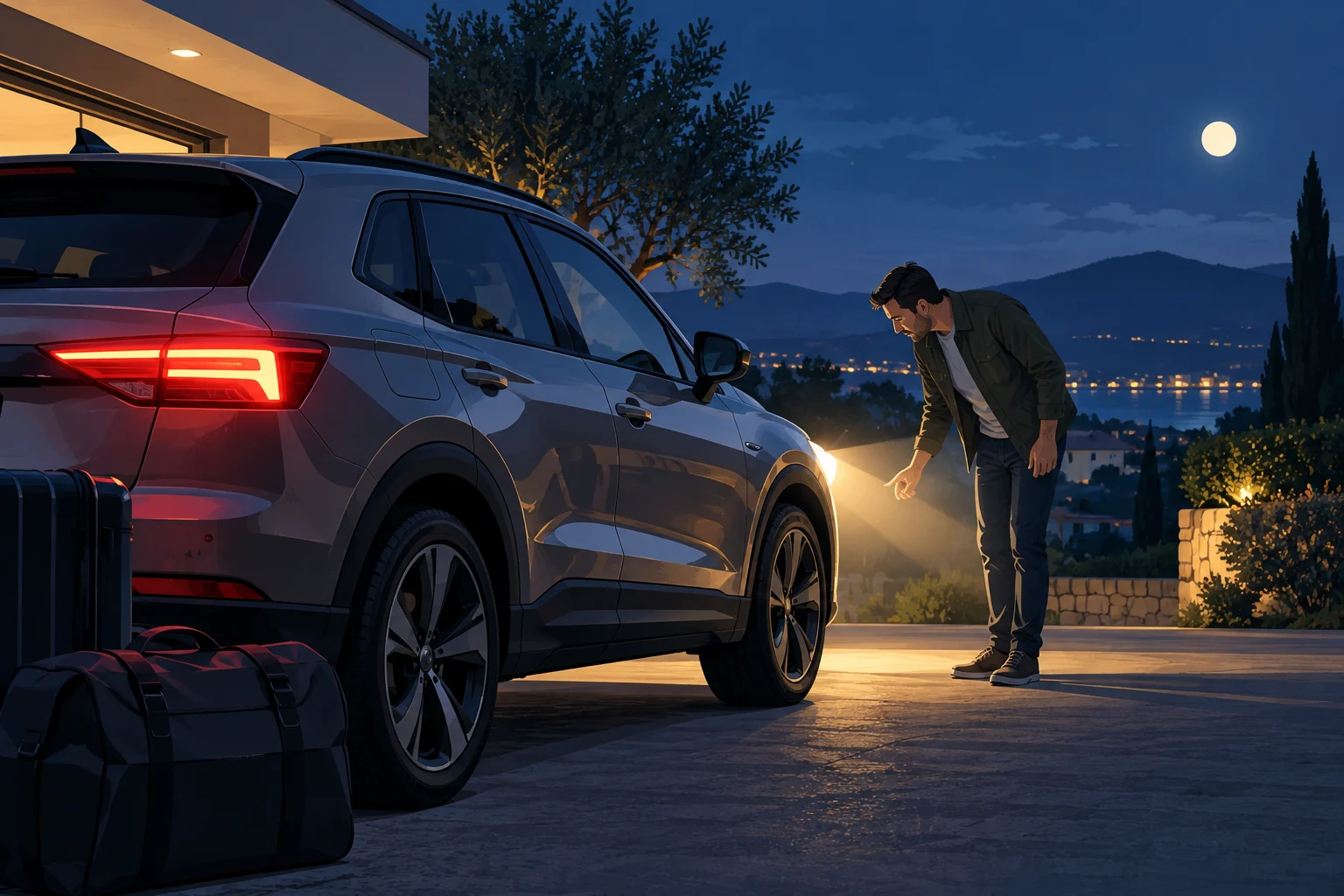
Before you set off, check that all the lights work and that the lenses and windows are clean. Also check that the headlights are correctly adjusted so they do not dazzle other drivers, as Spain’s Directorate-General for Traffic (DGT) recommends.
These are separate checks: working lights do not mean their alignment is correct. For more information about headlight types and what to check, see this guide to filament, LED and Matrix LED headlights: what to check.
Section references: Consejos para conducir de noche ↗
Windscreen and mirrors: keep them clean and clear
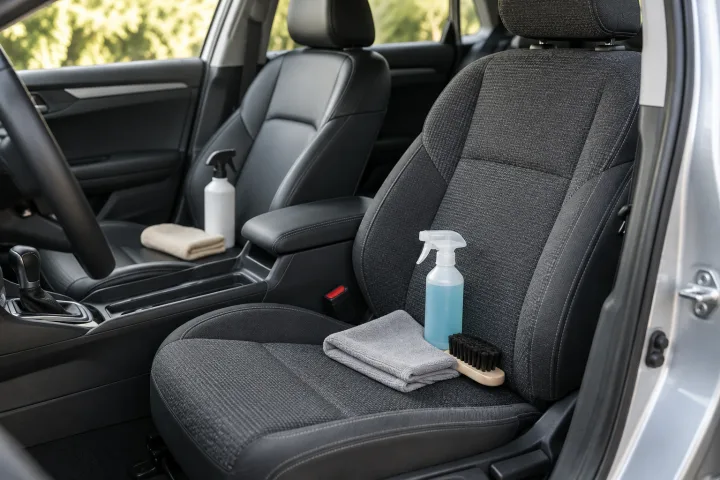
Keep both the front and rear windscreens clean, inside and out. Before setting off, also check the windscreen washer fluid level, as Continental recommends.
For more guidance on wiper condition and compatibility, see the guide to spotting wiper wear and choosing compatible blades.
When driving at night, check your mirrors more frequently, as the DGT recommends.
Section references: Consejos para conducir de noche ↗ · Conducir de noche: consejos para conducir de noche de forma segura ↗
Speed and distance: drive according to what you can see
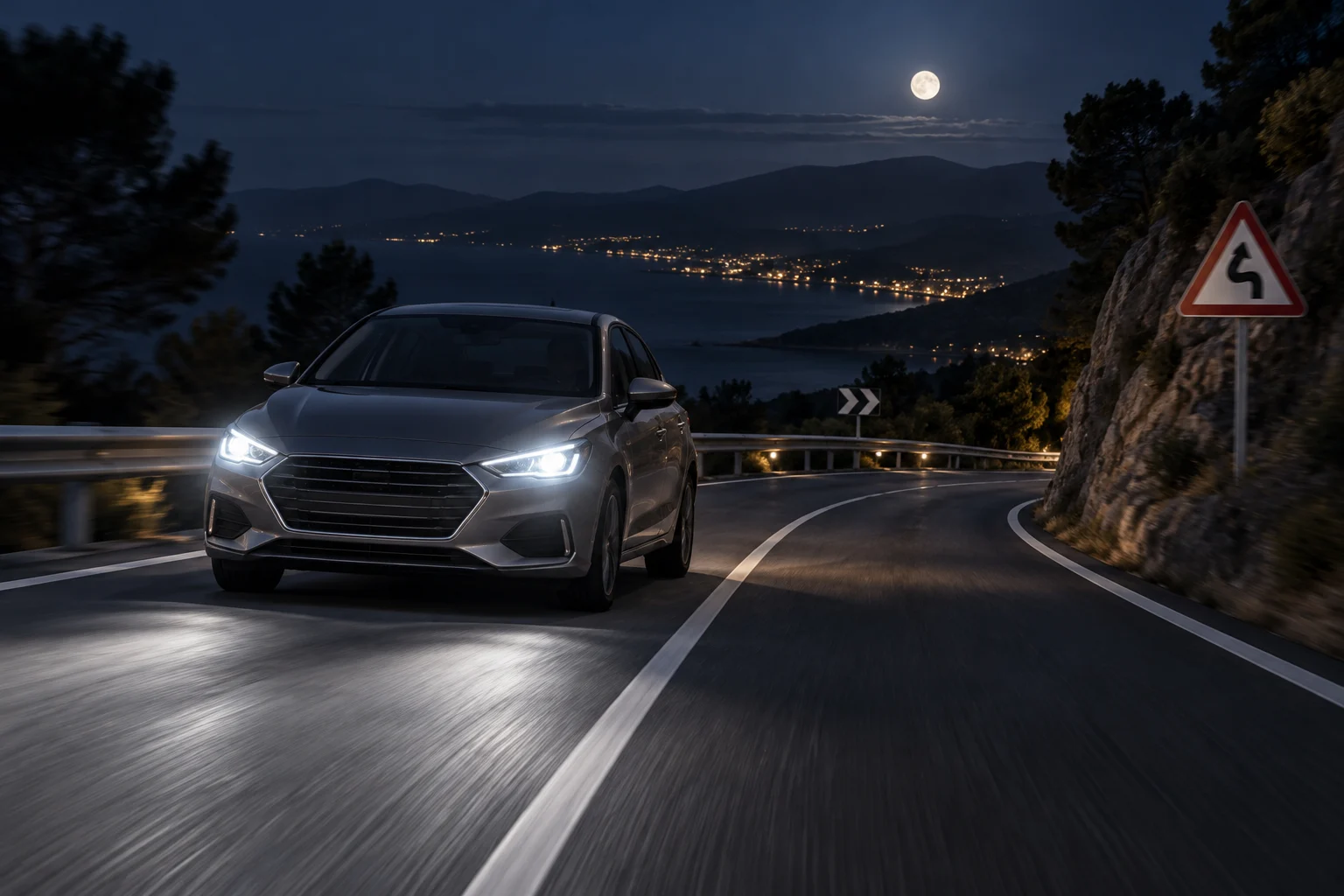
Adjust your speed to the lighting and road conditions. Kia suggests driving at a speed that allows you to stop within the area illuminated by your headlights. If you cannot do that, slow down. Also increase your following distance to give yourself more time to react, as RACE recommends.
Use the illuminated area as a practical guide during the journey: if your speed does not allow you to stop within it, slow down. Keeping a safe following distance is an additional measure; it does not replace adjusting your speed.
Section references: Consejos para conducir de noche ↗ · Consejos para conducir de noche y evitar riesgos ↗
Plan long journeys at night
For a long night-time journey, plan your route and identify rest areas in advance. As well as checking the lights and wipers as described above, include the tyres in your car preparations.
The DGT considers breaks every hour or hour and a half advisable, but this is not a universal rule. If you notice signs of fatigue, stop sooner in a safe place.
Section references: Consejos para conducir de noche ↗ · Conducir de noche: consejos para conducir de noche de forma segura ↗ · Consejos para conducir de noche ↗
Tiredness: when to stop
The DGT advises stopping to rest in a safe place if you experience watery eyes, eye strain, drowsiness or itchy eyes. Do so before continuing your journey.
Breaks every hour or hour and a half are a recommendation for planning rest, not a reason to wait if you notice any of these symptoms: find somewhere safe and stop before your next planned break.
Section references: Consejos para conducir de noche ↗ · Consejos para conducir de noche ↗
A short checklist for your journey
Before setting off, go over these three areas: your car, your driving and your rest.
Section references: Consejos para conducir de noche ↗ · Conducir de noche: consejos para conducir de noche de forma segura ↗ · Consejos para conducir de noche ↗ · Consejos para conducir de noche y evitar riesgos ↗
- Car and route: check the lights, lenses, windows, headlight alignment, windscreen washer fluid and tyres; locate rest areas.
- On the road: check your mirrors, adjust your speed so you can stop within the area illuminated by your headlights, and increase your following distance.
- If you notice signs of fatigue, stop somewhere safe and rest; do not wait for your planned break. Breaks every hour or hour and a half are a DGT recommendation, not a universal rule.
What should I check on my car before driving at night?
Check that all the lights work, that the lenses and windows are clean, and that the headlights are adjusted so they do not dazzle other drivers. Also check the windscreen washer fluid level and, for a long journey, the tyres.
How should I adjust my speed when driving at night?
Adjust it to the lighting and road conditions. One guideline is to maintain a speed that allows you to stop within the area illuminated by your headlights; if you cannot, slow down. Also increase your following distance.
When should I stop during a night-time journey?
The DGT considers breaks every hour or hour and a half advisable, but this is not a universal rule. If you experience watery eyes, eye strain, drowsiness or itchy eyes, find somewhere safe, stop and rest before continuing.