Multi-Day Motorcycle Trips: How to Plan Each Stage
A practical guide to organising stages, fuel stops and breaks, checking conditions before each day’s ride, and having alternatives ready if the route changes.
Key points
Plan each stage around your experience, the type of road and available fuel stops, without assuming that a certain distance always takes a fixed amount of time. Check forecasts and advisories before setting off, and decide in advance how to shorten or change the route.
Start by deciding what kind of trip you want
The right route cannot be decided by looking at a map alone. Before marking roads, work out how many days you have, where you are setting off from and what kind of day you want to enjoy: a relaxed ride on secondary roads, a getaway with a few faster sections, or a trip focused on reaching particular destinations. These decisions shape the route and help you avoid filling the plan with conflicting goals.
Also take your experience and familiarity with the motorcycle into account. If this is your first multi-day trip, it is wise to plan days you can shorten and not assume you will maintain the same pace every day. If you already know which roads and riding durations you find comfortable, use that personal experience to compare options rather than relying on a universal figure.
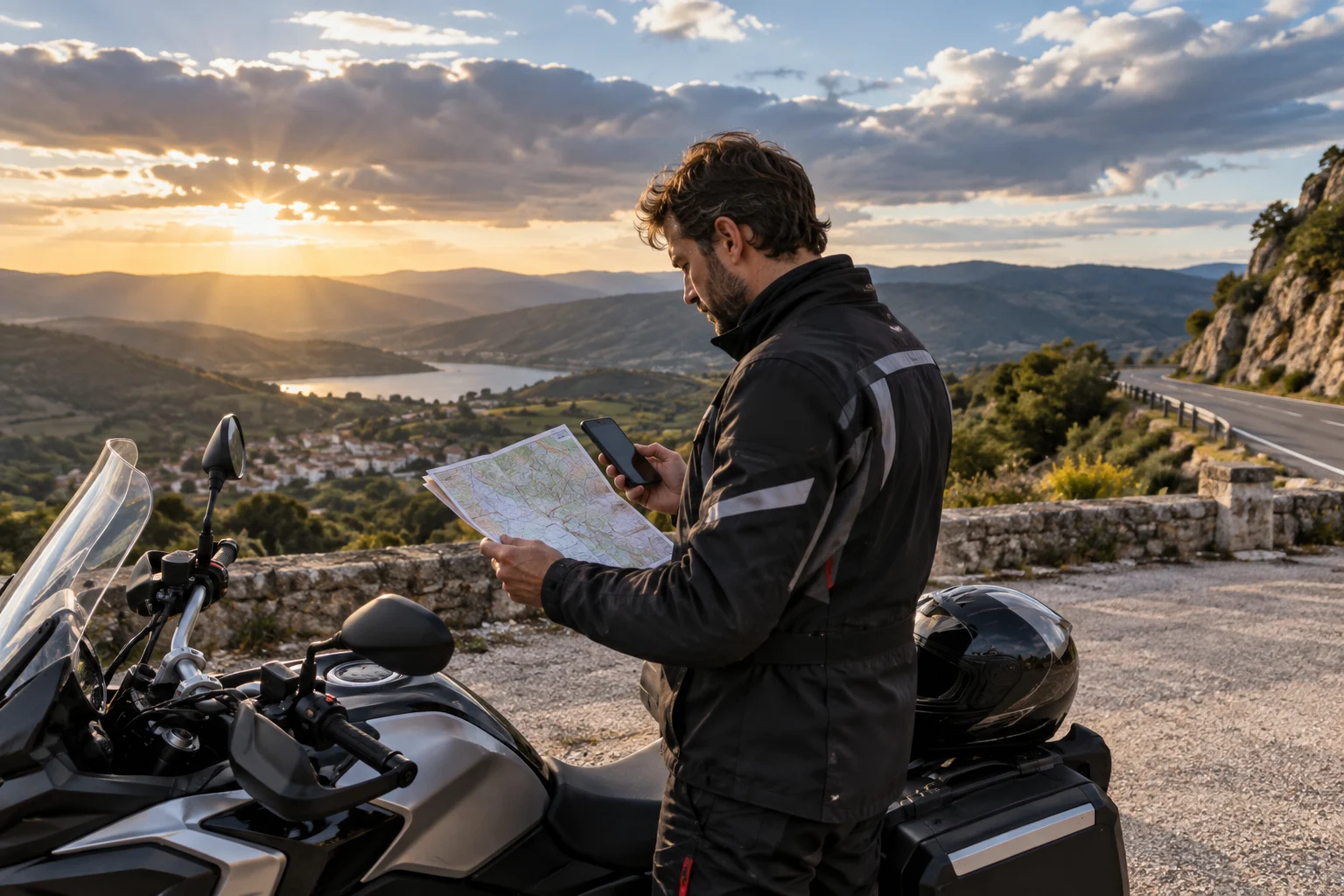
Choose a starting point, a destination and a few intermediate points that make sense to you. RideLink recommends setting these waypoints and checking the type of road, distance and estimated time. You can plot the main route first, then check whether each detour adds something or simply makes the plan more complicated.
Section references: Planificar rutas en moto con RideLink ↗
- Note how many full riding days you have and which destination you need to reach each day.
- Decide whether you want to prioritise scenery, a particular road or arriving at a specific time.
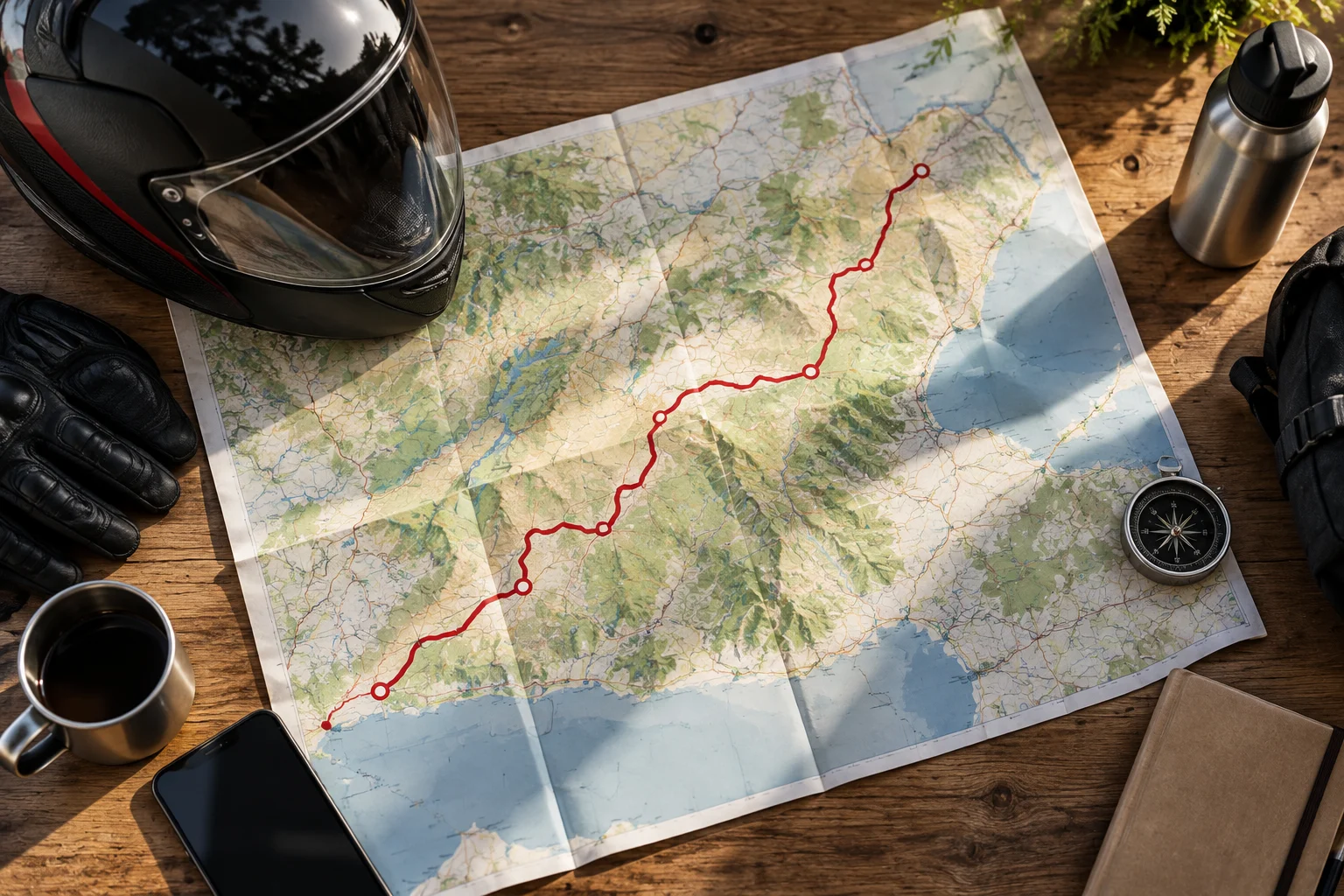
Plan stages around the route and conditions, not just the distance
Two routes of a similar distance can require different planning if one follows fast roads and the other takes secondary roads. So do not treat mileage as a promise of how long the ride will take. Check the type of road, the full route and the estimated time provided by your planning tool; use that estimate to compare options, not as a guaranteed arrival time.
Review each day’s itinerary section by section. Check where the type of road changes, which intermediate points matter to you and whether a major detour takes you too far from your planned destination. Calimoto includes planning stages among the aspects of organising a route; the practical principle is to give each stage a clear objective and leave room to change it.
If you are choosing between an ambitious stage and an easier one, compare both with your experience and the conditions expected that day. Avoid adding stops or detours just to complete an itinerary on paper.
| What to check | Useful question | How to use it |
|---|---|---|
| Type of road | Which roads make up the route? | Compare the options and choose the one that suits your preferences. |
| Estimated time | What departure time was it calculated for? | Use it as a guide and check it again before setting off. |
| Intermediate points | Which stops or destinations make the route worthwhile? | Keep the ones that add value and note which ones you can skip. |
| Alternative | Which section could you shorten or change? | Decide before setting off so you do not have to rely on improvising. |
Section references: Ruta en moto perfecta: planéala fácilmente con calimoto ↗ · Planificar rutas en moto con RideLink ↗
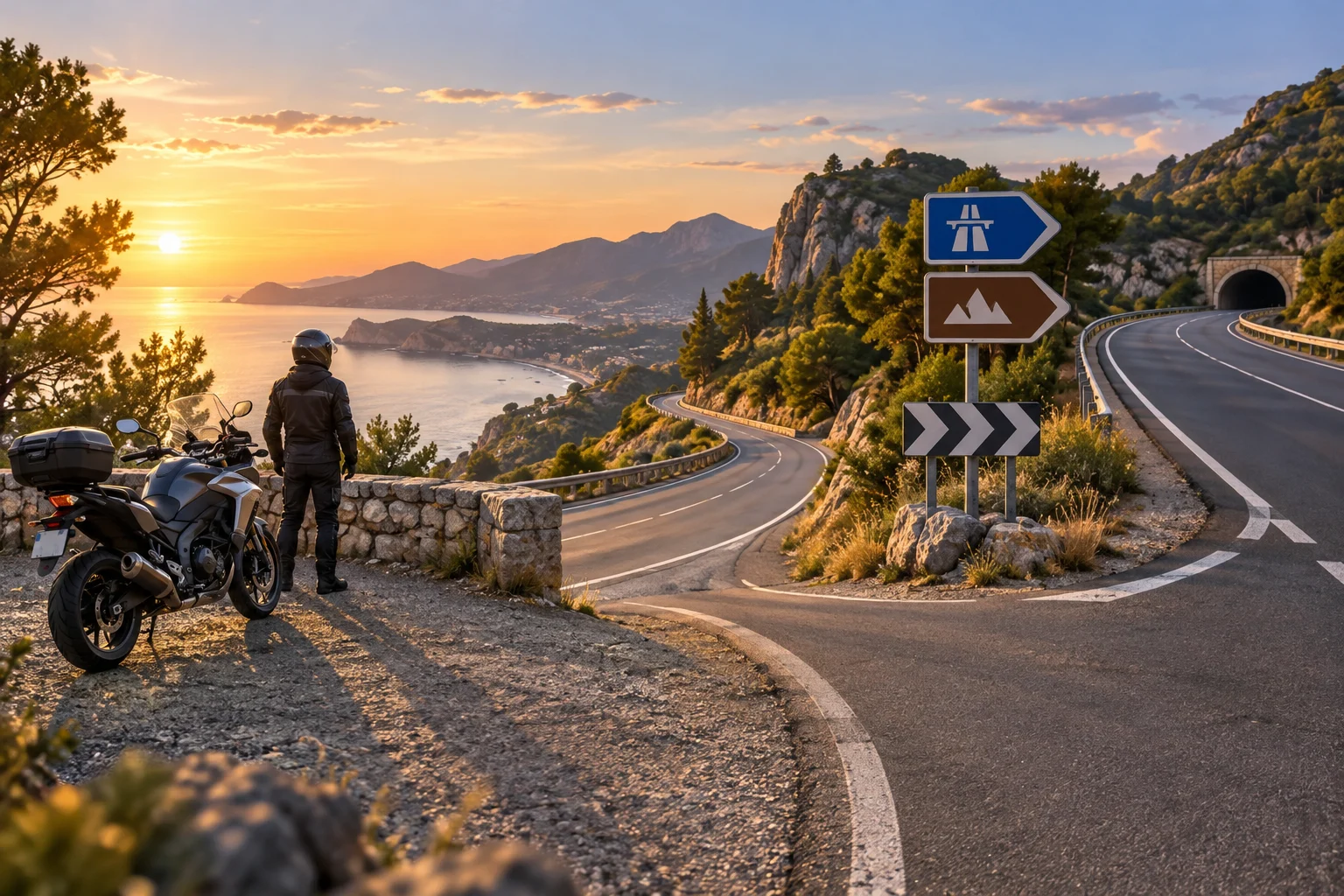
Plan fuel stops around your motorcycle
Do not use a generic range figure to plan your fuel stops: plan them for your particular motorcycle and chosen route. If you are unsure what safety margin to allow, avoid relying on a tight estimate.
Find fuel stops along the stage and check which ones fit the route you will actually take. If a planned stop will not work for you, identify another option before setting off. The point is not to schedule every minute, but to avoid relying on a single place to continue the journey.
Note fuel stops as flexible reference points, not fixed appointments. If you change the route, check again which options fit the revised itinerary.
- Plan fuel stops according to your motorcycle and chosen route.
- Mark one fuel stop and another reasonable alternative for each section that requires one.
- Review your selected stops if you change the route.
Leave time for stops and accommodation
A navigation estimate is not a guaranteed arrival time. When dividing up the stages, distinguish between the estimated time to ride the route and the time you will spend stopping, eating, resting or visiting somewhere. If you string together too many objectives, any stop may force you to reconsider the rest of the day.
Decide in advance which stops matter and which ones you can skip. For each one, ask yourself whether it meets a practical need, such as refuelling, or is simply a preference, such as visiting a place. That way, you can prioritise what is essential and adapt the rest without having to rework the whole trip.
Check where your accommodation is in relation to the stage’s actual destination and the next day’s route.
Check forecasts, roads and the route before each day’s ride
MotoMeteo advises checking the route the previous evening and reviewing it with your departure time in mind. As a precaution, check the itinerary again before setting off rather than simply relying on the saved plan.
Check the weather forecast for the areas where you will be riding. If the conditions give you pause, reassess the stage before setting off.
Calimoto also recommends checking the motorcycle and your equipment before each ride. In this guide, that check complements your planning: the route is only useful if you can start the day with the motorcycle and equipment checked.
Section references: Tiempo para un viaje en moto de varios días ↗ · Ruta en moto perfecta: planéala fácilmente con calimoto ↗
Prepare an alternative and use this checklist
An alternative plan does not need to be another complete trip. Simply decide which section you can leave out, which road you could take instead and where you should stop to reassess. If conditions suggest that you should not continue, stopping is also part of the plan: do not let an arrival time or reservation oblige you to keep riding.
Save the main route and alternatives so that you can identify them easily. Keep non-essential stops flexible.
The aim of useful planning is not to anticipate every possible problem, but to make it easier to decide when the itinerary no longer works. Before setting off, you should know what you can cut and where to stop to reorganise the day.
Section references: Tiempo para un viaje en moto de varios días ↗ · Planificar rutas en moto con RideLink ↗
- The evening before: confirm the destination, intermediate points, type of road and estimated time.
- The evening before: check the weather forecast.
- The evening before: find alternative fuel stops for the sections that require them.
- On the morning of departure: check the route again, taking your departure time into account.
- On the morning of departure: check the motorcycle and equipment before starting the stage.