Travelling by Car with Cats and Dogs: DGT Options
A carrier, harness and partition grille are not interchangeable solutions. The DGT outlines options for cats and dogs; if you are travelling with another animal, seek species-specific guidance.
Key points
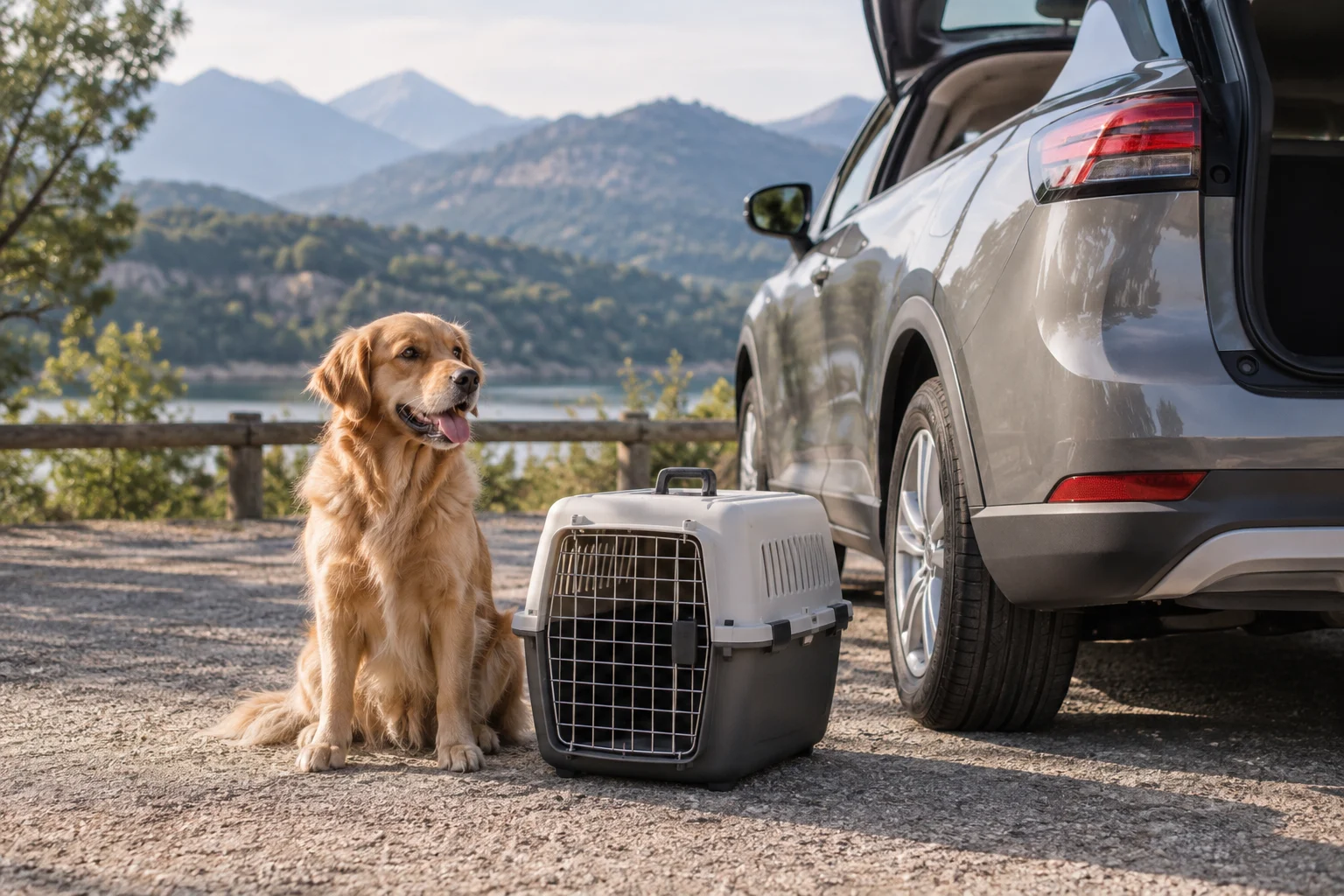
The DGT outlines different options for cats and dogs and advises against letting them travel loose. If you are transporting another animal, seek guidance specific to that species.
Before you set off: choose the right system
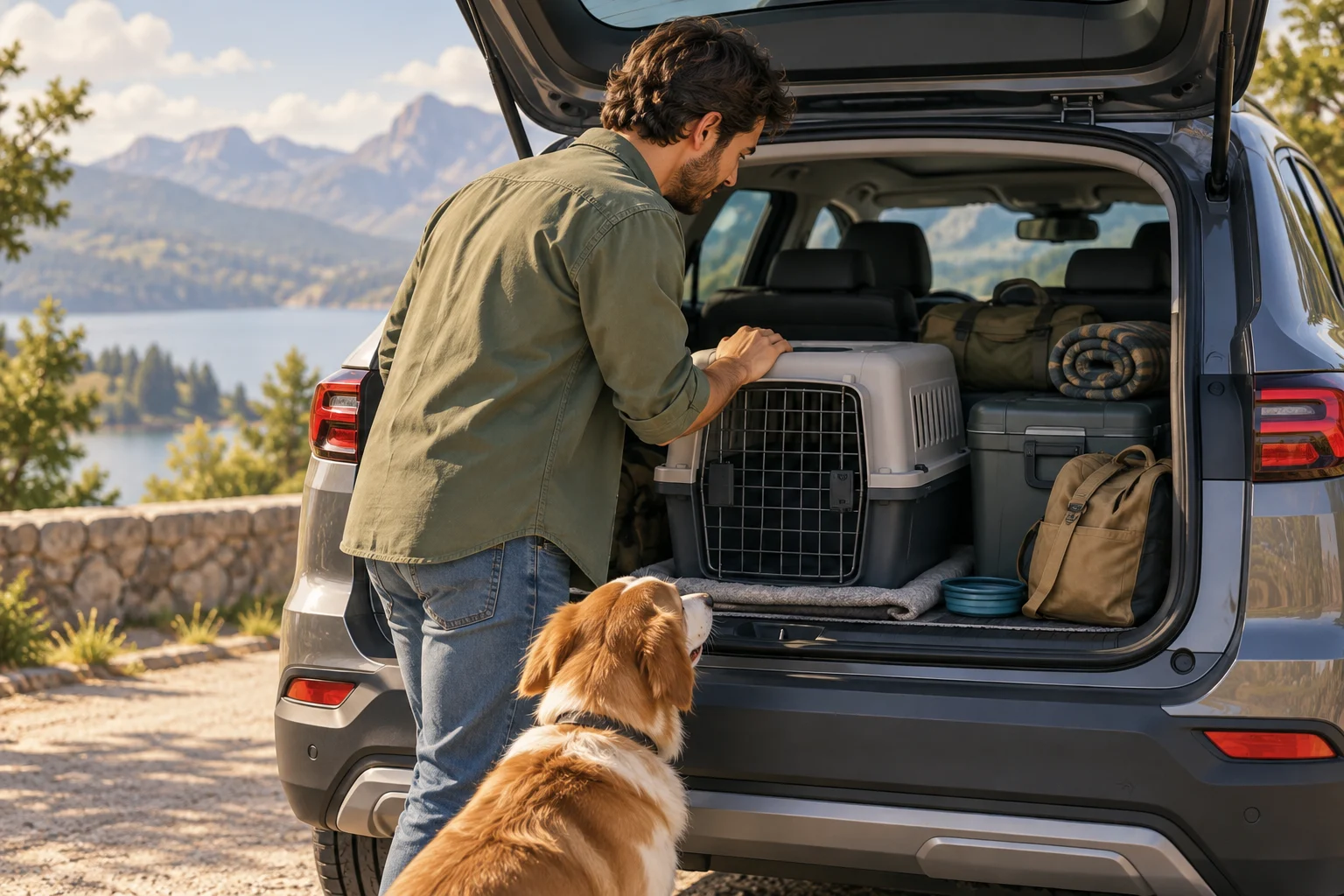
Travelling by car with a pet means deciding in advance how it will be transported. The DGT gives different recommendations depending on the animal; the table below summarises its options for cats and dogs.
Section references: Con tu mascota ↗ · Cómo transportar mascotas con seguridad ↗
- Do not let the pet travel loose in the passenger compartment.
- Do not use an ordinary lead as a restraint system: the DGT advises against it.
- The cited sources outline general options, but do not certify every specific product or its compatibility with each animal and car.
Restraints: DGT recommendations and options by animal
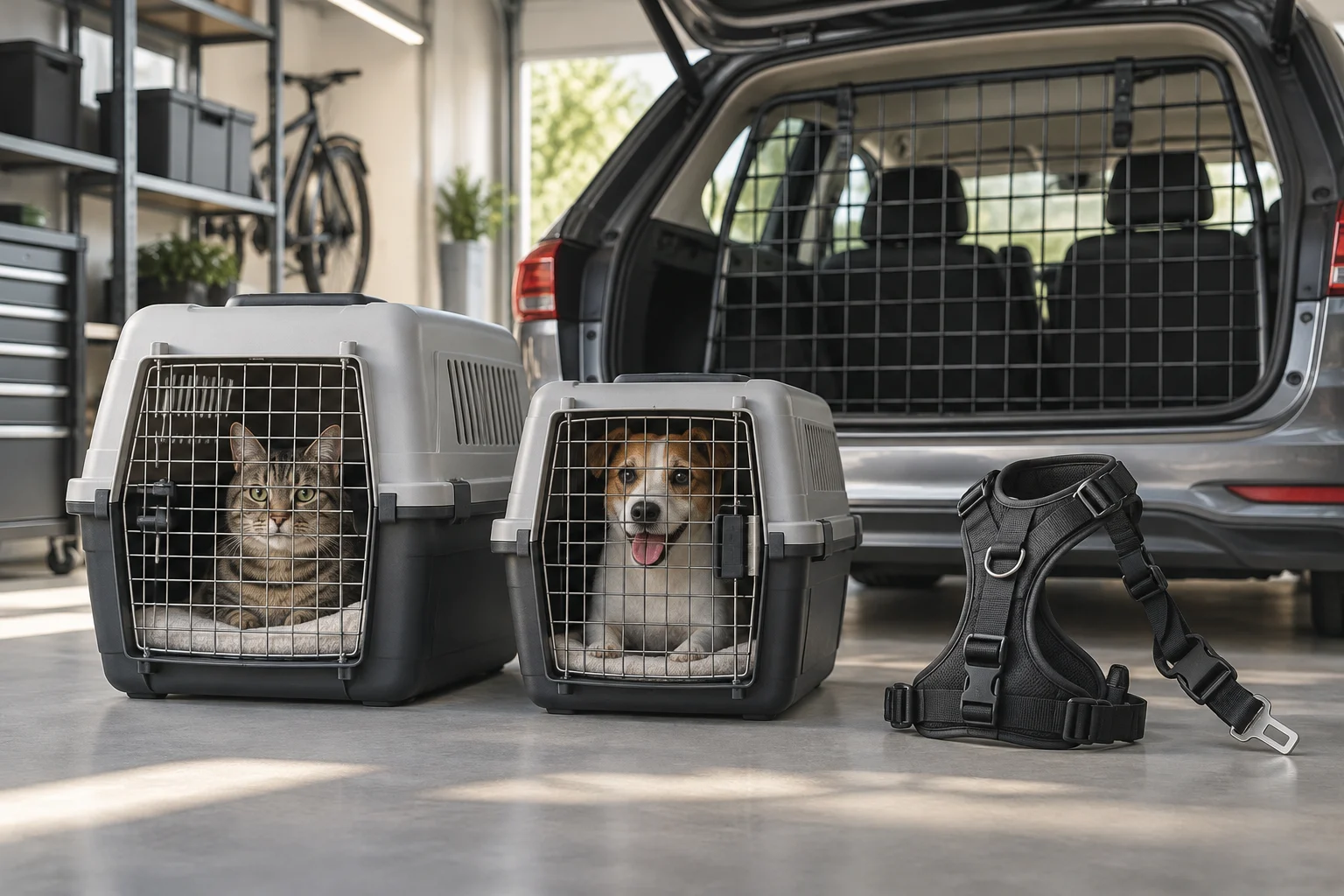
The DGT warns against restraining an animal with its lead: it is not a restraint system. A partition grille can separate the boot from the passenger area, but on its own it does not prevent serious injuries in a collision; the DGT says it is best to combine it with a carrier.
These guidelines do not certify that every product in these categories is suitable. This guide therefore cannot assume that any product advertised as a harness or carrier can be used correctly in every vehicle.
| Animal or option | DGT guidance | What not to assume |
|---|---|---|
| Cats | The DGT says cats should travel in a carrier. | That any carrier will fit or can be secured in any car. |
| Dogs | The DGT mentions a secured carrier or a device anchored to the seat belt using a harness, not a collar. | That an ordinary lead provides a restraint. |
| Partition grille | It can separate the boot from the passenger compartment; the DGT advises combining it with a carrier. | That it alone prevents serious injuries in a collision. |
Section references: Con tu mascota ↗ · Cómo transportar mascotas con seguridad ↗
If your journey crosses a border
If your journey crosses a border, start by checking the destination’s official requirements.
If you are travelling with another animal
The specific recommendations summarised here apply to cats and dogs. The DGT does not provide a single transport method suitable for all animals; if you are travelling with another species, seek guidance specific to it.
Section references: Cómo transportar mascotas con seguridad ↗
Does the DGT confirm that any carrier or harness will work in any car?
No. Its guidance outlines general options but does not certify specific products or their compatibility with each animal and vehicle.
Is a partition grille enough to transport a pet?
A grille can separate the boot from the passenger area, but on its own it does not prevent serious injuries in a collision. The DGT says it is best to combine it with a carrier.