Acoustic car glass: what it reduces and how to check
What acoustic glazing does, its limitations and how to verify whether a specific car has it before buying the vehicle or replacing a pane.
Key points
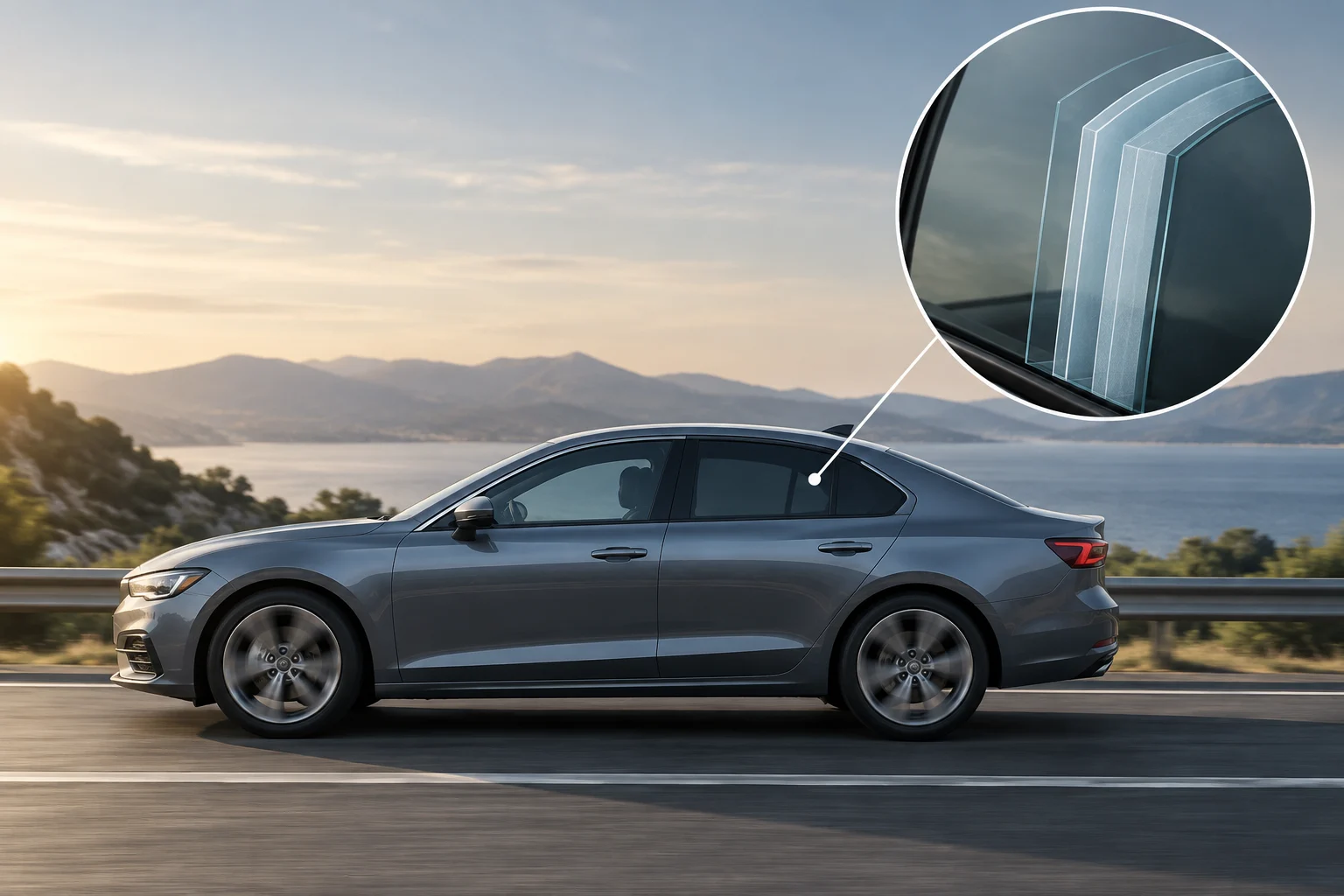
The acoustic laminated glass described by S-LEC uses an interlayer of PVB film to reduce the transmission of certain noises, including those from the engine, road and wind. To find out whether a specific car has it, request documentation for that vehicle and ask the manufacturer or a specialist to identify any glass markings; there is no universally accredited method established here.
What it is and what to expect
Acoustic glass is a glazing solution designed to reduce the transmission of certain sounds into the cabin. In the acoustic laminated glass described by S-LEC, an interlayer of PVB film helps attenuate noise from the engine, road and wind. This may contribute to comfort, especially if you spend a lot of time in the car, but it does not mean the cabin is isolated or that all sounds disappear.
Section references: Capa intermedia de Control acústico para vidrio laminado ↗ · Cristales con aislamiento térmico y acústico ↗
- It may be worth considering if you often drive on roads and prioritise acoustic comfort.
- Do not attribute all of a car’s quietness to its glass: the available information does not make it possible to separate the glass’s effect from that of the rest of the sound insulation.
How it is made and which noises it may attenuate
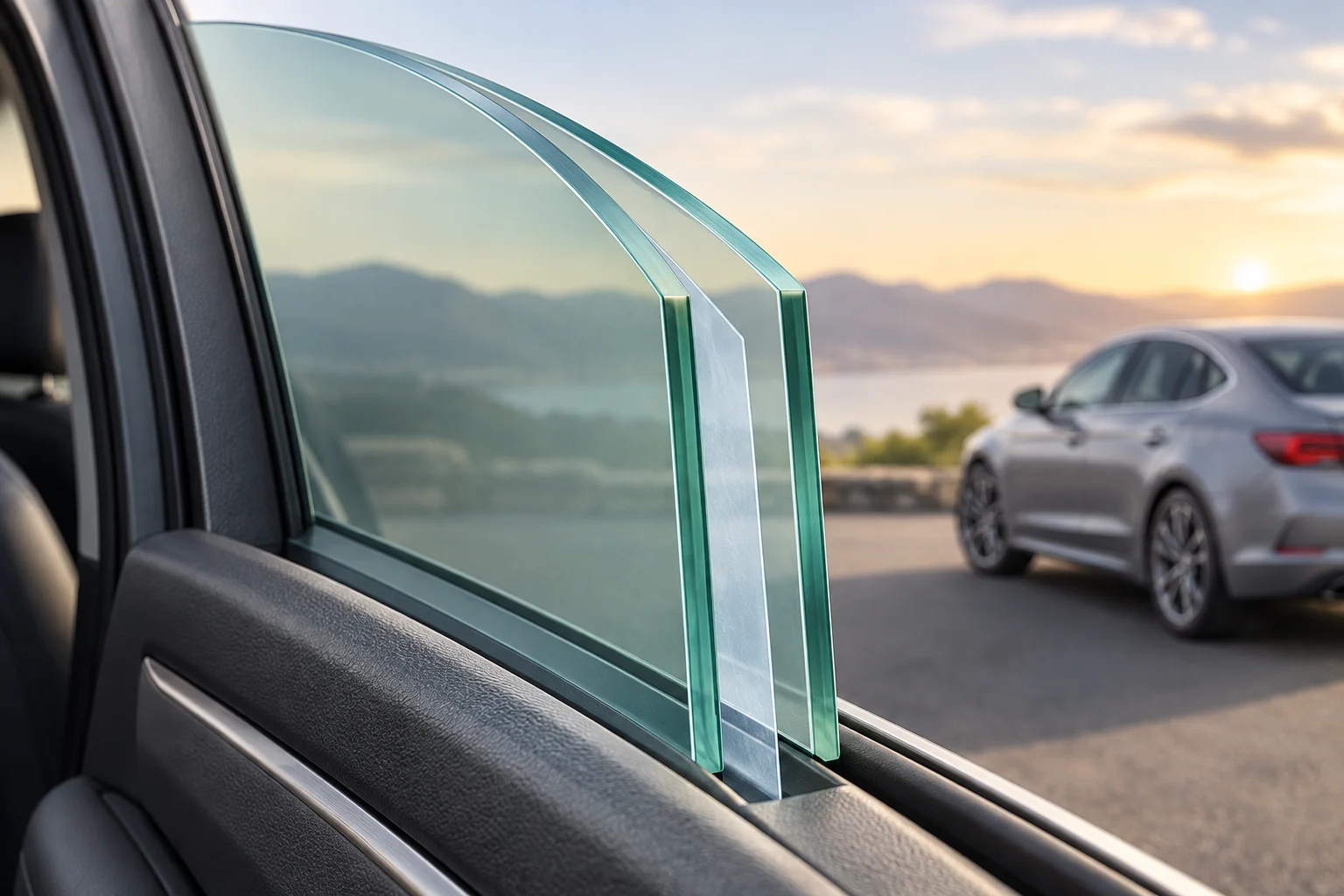
S-LEC describes laminated glass with an interlayer of PVB film, which in this solution is intended to reduce sound transmission. The specific material and characteristics of the assembly may vary; do not assume that all manufacturers use exactly the same construction or give their options the same name.
The source mentions noise from the engine, road and wind. It says that transmission is reduced, but does not provide figures that would allow you to estimate the difference in a particular model.
When describing one of its own options for glass with thermal and acoustic insulation, Porsche says it is more effective at eliminating unwanted noise than high-quality glazing. This refers to that option and that description; it is not a general guarantee that applies to every car or configuration.
Section references: Capa intermedia de Control acústico para vidrio laminado ↗ · Cristales con aislamiento térmico y acústico ↗

How to confirm whether a specific car has it
The most prudent approach is to check the documents for the specific vehicle. It is not enough to know that a model or trim could be ordered with acoustic glass: you need to verify the particular car, its year, market and configuration. The available information does not confirm which versions sold in Spain have it.
If you are buying a new car, ask for the configuration documents or order to identify the glazing and the affected parts explicitly. If it is a used car, ask the seller for documentary proof of the original configuration and check it with the manufacturer or an authorised service centre. If the documents do not clarify the matter, ask a glazing specialist in writing and provide the exact vehicle details.
Markings on the glass may help you make an enquiry, but do not interpret them yourself as conclusive proof of an acoustic function. Photograph the markings on each pane and ask a professional to confirm what they indicate and whether they match the vehicle specification. Do not assume that identifying one window also identifies the windscreen or the other panes.
Section references: Capa intermedia de Control acústico para vidrio laminado ↗
- Identify the car’s make, model, year, market and trim.
- Ask which specific panes have the feature: the windscreen, side windows or other glass.
- Request documentation or written confirmation. If you only have markings on the glass, ask a specialist to interpret them.
- If the answer is unclear, treat the feature as unconfirmed when comparing offers.
What to check when comparing new or used cars
Compare like-for-like configurations and ask about each pane of glass, not just the general description of a trim. Confirm the equipment on the specification sheet for each specific car.
If you can assess several vehicles, try to do so in similar conditions and pay attention to the sounds that bother you most on your usual journeys. This check may help you decide whether the perceived comfort justifies the price difference, but it does not replace documentary confirmation of the glass type and is not a technical measurement.
When buying a used car, also check whether the installed glass differs from what the documents state. If a pane has been replaced, do not assume it retains the original specification just because it fits the car or looks similar: ask for its part number and compatibility details before treating the feature as confirmed.
Section references: Capa intermedia de Control acústico para vidrio laminado ↗ · Cristales con aislamiento térmico y acústico ↗
- For a comfort test, try to keep driving conditions similar and make your decision based on how you actually use the car.
When it may be worthwhile and what to do if a pane is replaced
It may interest you if you drive many miles and noise from the engine, road or wind has a significant effect on your comfort. Even so, do not make it your only purchasing criterion: the available evidence does not quantify its effect or show that an acoustic option will change the experience equally in every car. Weigh the cost against your intended use and confirm exactly what the offer includes.
When replacing a pane, check the specification for your vehicle and confirm with the supplier that the replacement is compatible and retains the acoustic function if that feature matters to you. Do not choose based only on its appearance or a generic claim that it is equivalent glass: ask them to clarify the part, its reference and the feature you are looking for.
Section references: Capa intermedia de Control acústico para vidrio laminado ↗
Does acoustic glass eliminate road noise?
No. The source describes reduced transmission, not the complete elimination of noise or a universal figure.
Can you tell from the glass markings whether it is acoustic?
Do not treat them as conclusive proof. Photograph the markings and ask the manufacturer or a specialist to identify them.
How can I confirm whether a used car has this glass?
Request documentation for that specific car’s configuration and confirm which panes are included. If the markings on the glass are inconclusive, consult the manufacturer or a glazing specialist and provide the exact vehicle details.
What should I ask if a pane needs to be replaced?
Check your vehicle’s specification and ask them to confirm the part reference, compatibility and whether the replacement retains the acoustic function you want. The available information does not establish a part reference that is valid for all cars.